

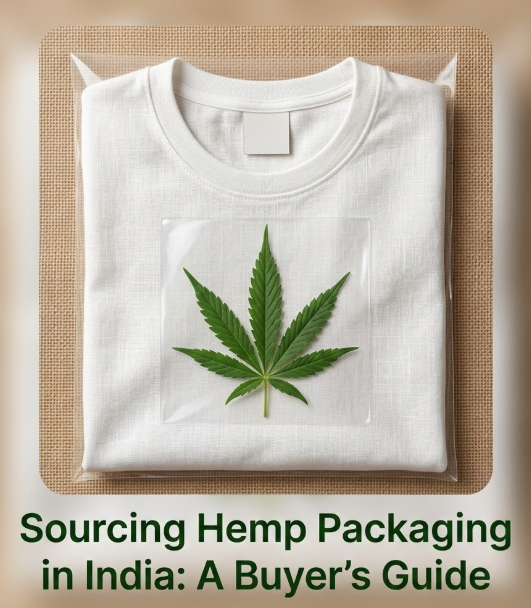
Sourcing Hemp Packaging in India: A Buyer’s Guide
If you type hemp packaging India into Google, you will see a mix of claims, product photos, and price lists.
But as a buyer, you need to know what the material is, what paperwork makes it legal, and what tests prove it will perform in real use.
Hemp packaging can mean three very different things:
- Packaging made from hemp fibre in paper or moulded formats
- Packaging made from hemp-based biopolymer blends
- Regular compostable plastics that use “hemp” as a marketing word, with no clear material proof
At the Hemp Foundation, we work with the versatile hemp plant and use its natural fibre strength to replace petroleum plastics in packaging use cases.
So this guide stays practical. It is written for teams who buy, regulate, fund, or teach this topic, and want proof, not slogans.
What types of hemp packaging can you source in India?
Let’s start with a simple question, what problem is compostable hemp packaging solving?
A courier bag has different needs than a garment polythene bag. A retail carry bag also has a different set of performance needs than a tray or a carton.
In India, most hemp packaging you will encounter falls into these buckets.
1. Hemp fibre paper and paper composites
This is the most straightforward category to explain. Hemp is used as a fibre input in paper and board.
The output behaves like paper packaging, not plastic.
Typical formats: mailers, cartons, tissue, tags, sleeves, inserts.

2. Hemp based biopolymers and blends
Plastic alternative biodegradable hemp packaging can help replace single use plastic molded trays or reinforced films. So, what is hemp plastic?
A hemp bioplastic product is rarely pure hemp. It is usually a blend where hemp derived material acts as:
- a filler or reinforcement fibre
- a bio-based feedstock fraction
- a performance modifier inside a compostable formulation
Typical formats you may source:
- compostable carry bags
- garment and inner polybags
- bin liners
- thermoformed packaging
- injection moulded items
Hemp as a label without proof might be a common marketing tactic.
If a supplier cannot clearly state whether it is hemp fibre paper, hemp biopolymer blend, or a standard compostable polymer with branding, treat it as a risk.
A quick check that saves time: ask for the bill of materials description, test report, and the certification. If they dodge any one of these, your procurement cycle will stretch.
Now that the material types are clear, the next step is legal and compliance reality in India.
Hemp packaging suppliers in India
There are multiple manufacturers and sellers of hemp and hemp based sustainable packaging in India.
Here are some hemp paper and bioplastic company options for packaging.
What rules and certifications should you check for compostable hemp packaging in India?
This section is where many well meaning buyers get stuck.
They find a product that “looks sustainable”, then discover later that a brand audit, a municipal rule, or a retailer policy blocks it.
If it claims to be compostable, you need proof of certified standards like EN 13432.
If a vendor sells compostable bags CPCB certified products, your documentation bundle should not be “a certificate PDF only”. It should include scope, product details, and marking or print compliance details for bags where required.
If it is paper-based hemp fibre packaging, focus on recyclability and additives
Hemp paper packaging can still create issues when:
- it is heavily laminated
- it uses barrier coatings that break paper recycling
- it uses inks or adhesives that fail recycling mill requirements
Once compliance is clear, sourcing becomes a structured vendor qualification task. Let’s make that process concrete.
How do you source a biodegradable hemp packaging supplier in India?
Most procurement failures happen for predictable reasons:
- the sample was good, the bulk was inconsistent
- the claim was true, but not true for your thickness or print method
- the price looked low, then wastage and downtime erased the savings
So run supplier qualification like a checklist.
1. Lock your use case and specifics in writing
Keep it simple. One page works. Include:
- format: bag, mailer, carton, liner
- dimensions and thickness or GSM
- load requirement and tear requirement
- sealing method and print coverage
- storage conditions and shelf-life expectations
If you buy film products, ask directly if it runs on standard lines.
2. Ask for certifications
A supplier that can scale will respond cleanly. Ask for:
- material data sheet
- certification and scope
- test report for compostability or biodegradation claims
- batch traceability method
- printing guidance
3. Run a simple pilot that mirrors real handling
Do not run a desk test only. Pilot like this:
- 1-2 cartons of samples across batches if possible
- real packing line sealing test
- drop, scuff, humidity exposure relevant to your route
- customer unboxing check
One genuine question: what is the fastest way to spot a weak supplier? They will push you to skip the pilot and jump to MOQ.
4. Compare total cost per usable unit
When you compare prices, price per unit. Also account for:
- conversion cost (printing, cutting, sealing, moulding)
- failure cost (rejections, line stops, returns)

But why choose hemp as a sustainable packaging material?
The hemp plant is a strong alternative to both plastic and timber based packaging. It grows fast, needs less water than many fibre crops, and can produce usable fibre in a single season.
This lowers pressure on forests compared with paper made from slow growing trees.
For plastic replacement, hemp can support paper, moulded fibre, and bio-based polymer blends that reduce reliance on fossil inputs.
Many countries including India have restricted single use plastic items, and brands face tighter rules on packaging waste and recycling.
Hemp helps businesses adapt without changing the purpose of packaging.
You can still protect goods, ship at scale, and print brand messaging, then choose an end-of-life route that fits local systems.
We at Hemp Foundation, work to make hemp based materials practical at scale. We support research on hemp feedstocks and blends, help teams separate real compostability from vague “green” claims, and push for clear, enforceable standards that buyers can trust.
FAQs
- What is the quickest way to start sourcing hemp packaging in India?
Start with your use case, then shortlist compostable hemp packaging India suppliers that share material specs, test reports, and batch traceability.
2. How do I know if a hemp plastic packaging is biodegradable?
Ask if it is hemp fibre paper or a compostable polymer blend. Request the exact standard, scope, and SKU test report. Match claims to India compliance, then run a pilot on your real packing line.
3. What paperwork to look for in compostable hemp plastic packaging in India?
For compostable carry bags, look for CPCB certified documentation tied to your thickness, print, and batch code before bulk orders.
4. What is the right way to compare hemp packaging prices across suppliers?
Pricing shifts with format, barrier needs, printing, and MOQ. Compare cost per usable unit, not resin price. Track rejects, sealing failures, storage spoilage, and lead time stability, then lock specs into contracts with change control.
5. Why are buyers switching from plastic and timber packaging to hemp?
Hemp helps cut fossil plastic use and reduces pressure on forests. It also supports local agriculture and processing jobs today.

Vishal Vivek
Vishal Vivek is the Founder and CEO of Ukhi, a pioneering bio-materials company dedicated to ending plastic pollution by converting agricultural waste into high-performance compostable polymers. With a background in sustainable entrepreneurship and over a decade of technology experience, he leads Ukhi’s vision to create scalable, planet-positive material solutions. Previously, Vishal founded the Hemp Foundation, where he empowered more than 1,000 farmers and advanced sustainable livelihood initiatives. His work has been recognized through awards such as the HDFC Parivartan Grant and featured in leading publications like Forbes and Entrepreneur. Times Group recognized him as a legendary entrepreneur and published his biography in “I Did IT- Vol 2” alongside social pioneers like Bindeshwar Pathak (Sulabh International) and Anshu Gupta (Goonj). Vishal has authored more than 200 articles on sustainability and hemp, reflecting his deep expertise and advocacy for regenerative solutions. His commitment to grassroots impact led him to live in the remote mountains of Uttarakhand, where he immersed himself in the lives of marginal farmers, understanding their challenges and co-creating economic opportunities through hemp-based initiatives. A deeply passionate innovator, Vishal often draws inspiration from seemingly impossible achievements: “If Elon Musk can make rockets reusable, or Dashrath Manjhi can carve a path through a mountain with rudimentary tools, why can’t we eliminate the demon of single-use plastic while uplifting struggling farmers? We will make it happen—whatever it takes.” Ukhi is proud to be supported by premier institutions including IIT Guwahati, NSRCEL-IIM Bangalore, Indian School of Business (Hyderabad), Indian Council of Agricultural Research (ICAR Pusa), and the Indian Institute of Packaging. Vishal is committed to demonstrating that business can be a powerful catalyst for global environmental and social good. Connect with Vishal Vivek
Related Posts
A Deep Dive into Chamoli Tragedy – Causes and Prevention of Future Disasters
At Hemp Foundation, we were taken aback at the news of glacier breaking in Chamoli, triggering a fla
Hemp Textile Industry: Global Market Size, Scope and Industry Landscape
Source: https://unsplash.com/photos/nFumIdf3IHE For a quick hemp textile industry overview, let̵
How Hemp Can Help Reduce Garbage In India?
Before we explore how hemp can help reduce garbage in India, here’s a fact. An April 2018 article

