

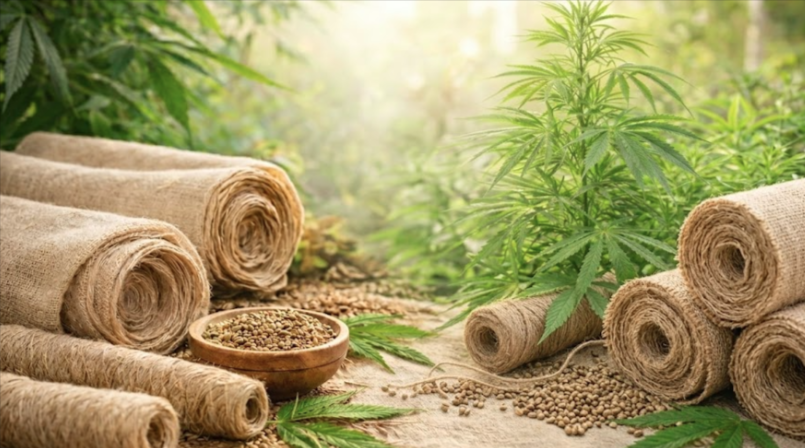
State of the Hemp Industry in India (2026)
Indian farmers have cultivated hemp for centuries. But the modern hemp industry in India is still being built.
In 2026, it is a regulated but early-stage market where policy is evolving.
At the core of this adoption are Indian consumers looking for eco-friendly products and packaging. It creates a huge opportunity, and thus, the industrial hemp industry in India is rapidly scaling from a niche to a mainstream market.
Several eco-conscious hemp startups in India are at the forefront of this growth story. Let’s look at the state of the hemp industry in India.
What does India’s hemp industry look like in 2026?
Without any doubt, the hemp market size in India is still small. It is valued at approximately $300 million and expected to grow at 24% – 34% annually.
In 2026, the industry sits across a few clear segments:
- Hemp fibre and textiles
- Hemp seed foods and nutrition
- Hempcrete and natural building materials
- Biocomposites, packaging, and sustainable materials
Textiles are a natural starting point because India already has a strong textile base. Hemp fibre is blended with cotton, linen, or other fibres for the apparel industry.
Food is an emerging segment. Hemp seeds, hemp seed oil, and hemp seed flour can be sold without any hindrance as long as the THC content is within 3%.
Hempcrete is a novel, sustainable bio-composite material. The Indian market will be slow to adapt to such innovations, but hopes remain high.
There has been a steady rise in the use of biocomposites for packaging material. The use of hemp and its derivatives for packaging will reduce the dependence on traditional plastics.
While market estimates suggest strong growth potential for the formal industrial hemp sector, there is much that is unknown. There is a lack of reliable data on acreage under hemp plantation and the domestic production of raw hemp.
That is why the next question matters: what does the law actually allow?
Is industrial hemp legal in India?
The answer is yes, but not in a casual or blanket way.
Industrial hemp is legal in India, but that does not mean anyone can grow cannabis. Legally, certain uses of the plant are permitted under controlled conditions.
The NDPS Act, 1985, treats different parts of the cannabis plant differently. The flowering or fruiting tops and separated resin are strictly controlled. Seeds and leaves are treated differently under the Act.
The Act also gives state governments the power to regulate and license cultivation for specific purposes. So, while hemp cultivation is entirely legal in India, it depends heavily on the state’s permission and licence conditions.
For this reason, the hemp policy in India cannot be understood through a single headline. The legal structure allows hemp cultivation, but the adoption is in the hands of the various state governments.
Which states are moving on to hemp cultivation?
Hemp cultivation in India varies across the country. Some states have moved ahead while others have taken up a wait-and-see approach.
At this moment:
Uttarakhand is leading in hemp cultivation. It was the first to issue commercial cultivation licenses.
Himachal Pradesh has rolled out a new initiative for industrial hemp cultivation. It is moving from unmanaged cannabis growth to well-regulated, low THC hemp cultivation.
Uttar Pradesh & Madhya Pradesh are set to follow in their footsteps with pilot projects already approved.
Hemp Industry in India: Key State-Level Developments and Policy Signals
In the next section, we look at the other end – which sectors are driving demand for hemp in India.
Which sectors are driving hemp demand in India?
The demand for hemp products in India is chiefly from those sectors where hemp solves a practical problem.
The first is textiles.
India is one of the leading textile markets in the world. We are among the best in fiber production, spinning, weaving, and the garment industry.
Hemp can enter this system as a sustainable fiber. Hemp blended with cotton and polyester is easier to process and has a soft feel. The hemp textile industry in India offers a significant opportunity.
The second sector is food and nutrition.
Hemp seed oil, hemp protein, and hemp seed flour are ideal for health-conscious individuals. FSSAI has paved the way with detailed guidelines. Hemp protein is perfect for smoothies and is a good source of protein for vegetarians.
The third sector is wellness.
There is interest in therapeutic formulations such as balms, sleep products, and pain-relief products. However, this category must stay disciplined and not make unsubstantiated claims, as is often the case.
The fourth sector is construction.
Hempcrete is a biocomposite material made by blending the woody core of the hemp plant with lime binder. It is an innovative building material that will find many buyers due to its low price and excellent strength.
The fifth sector is packaging.
India is drowning in plastic. Hemp-based packaging is affordable yet strong enough to replace conventional plastics. The long, strong bast fibres of the hemp plant can be converted to cardboard and paper. Blending hemp powder with PLA creates biocomposites that are suitable for making trays, containers, and films.

This is where the future gets interesting. Hemp fibre, shives, and agricultural residues can support material innovation, from fibre-based packaging to composites and polymer blends. At the Hemp Foundation, in our own work with sustainable materials, we see this clearly: the value of hemp is not only in one product, but in how every part of the crop can feed a value chain.
That is where the hemp business in India becomes more than a farming story. It becomes a materials, manufacturing, and rural enterprise story.
What is holding the Indian hemp industry back?
The future of the hemp industry in India is quite bright. But it is not all smooth sailing. The industry faces a few major roadblocks:
Confusion Factor
Many people still confuse industrial hemp with marijuana. This social stigma makes hemp products difficult to manufacture and market.
Unclear Policies
A license valid in Uttarakhand might not help a business transport hemp products through a stricter state like Maharashtra. A national-level policy is necessary to overcome this bottleneck.
Weak Infrastructure
India lacks specialized manufacturing units to separate the various parts of the hemp plant and process it. The work is mostly done manually, which drives up costs.
Seed Availability
Farmers struggle to access certified, high-quality seeds that guarantee a stable THC level below the legal 0.3% limit. For the hemp industry in India to scale up, this hurdle must be removed.
What is the outlook for the hemp industry in India?
The future of the hemp industry in India is promising. But there are considerable limitations placed on the industry that are holding it back. The question is not whether hemp can succeed in India. The question is whether policymakers can remove the barriers so that the industrial hemp industry in India can flourish.
For entrepreneurs and investors, there is an opportunity in working within the existing framework. The market is waiting, and the demand is there. The only missing piece is a clear path forward, which will emerge with steady persuasion.
Frequently Asked Questions
What is the outlook for the hemp industry in India?
The industrial hemp industry in India looks promising. Currently, it is valued at $300 million and is likely to grow at 25%-30% CAGR. However, growth depends on clearer licensing policies and the establishment of processing infrastructure.
What is the demand for hemp in India?
It varies with the sector. Demand is strongest in textiles and sustainable packaging. There is growing interest in hemp seed foods, wellness products, and new building materials.
Which state is leading hemp cultivation in India?
Uttarakhand legalized the cultivation of industrial hemp in 2018. As of 2026, it is the leading producer of raw hemp.
In which state is hemp legal in India?
It is legal to cultivate hemp plants in India. But it requires a license that is granted by the state governments. Licensed low-THC cultivation is most clearly associated with Uttarakhand and Himachal Pradesh. while other states need rule-level verification before strong claims are made publicly.
Is hemp farming profitable in India for cultivators?
Hemp farming can become profitable when licences, seed, processing, and buyers are aligned. Without that chain in place, farmers’ risk stays high.

Vishal Vivek
Vishal Vivek is the Founder and CEO of Ukhi, a pioneering bio-materials company dedicated to ending plastic pollution by converting agricultural waste into high-performance compostable polymers. With a background in sustainable entrepreneurship and over a decade of technology experience, he leads Ukhi’s vision to create scalable, planet-positive material solutions. Previously, Vishal founded the Hemp Foundation, where he empowered more than 1,000 farmers and advanced sustainable livelihood initiatives. His work has been recognized through awards such as the HDFC Parivartan Grant and featured in leading publications like Forbes and Entrepreneur. Times Group recognized him as a legendary entrepreneur and published his biography in “I Did IT- Vol 2” alongside social pioneers like Bindeshwar Pathak (Sulabh International) and Anshu Gupta (Goonj). Vishal has authored more than 200 articles on sustainability and hemp, reflecting his deep expertise and advocacy for regenerative solutions. His commitment to grassroots impact led him to live in the remote mountains of Uttarakhand, where he immersed himself in the lives of marginal farmers, understanding their challenges and co-creating economic opportunities through hemp-based initiatives. A deeply passionate innovator, Vishal often draws inspiration from seemingly impossible achievements: “If Elon Musk can make rockets reusable, or Dashrath Manjhi can carve a path through a mountain with rudimentary tools, why can’t we eliminate the demon of single-use plastic while uplifting struggling farmers? We will make it happen—whatever it takes.” Ukhi is proud to be supported by premier institutions including IIT Guwahati, NSRCEL-IIM Bangalore, Indian School of Business (Hyderabad), Indian Council of Agricultural Research (ICAR Pusa), and the Indian Institute of Packaging. Vishal is committed to demonstrating that business can be a powerful catalyst for global environmental and social good. Connect with Vishal Vivek
Related Posts
MSME day Speech of Mr Vishal at Vigyan Bhawan
Mr Vishal Vivek, CEO & Co-Founder at Hemp Foundation was invited by MSME Ministry to tell Hemp F
What Are The Benefits Of Hemp Protein Powder?
[vc_row][vc_column][vc_column_text]Hemp is a plant that has been grown for thousands of years. For a
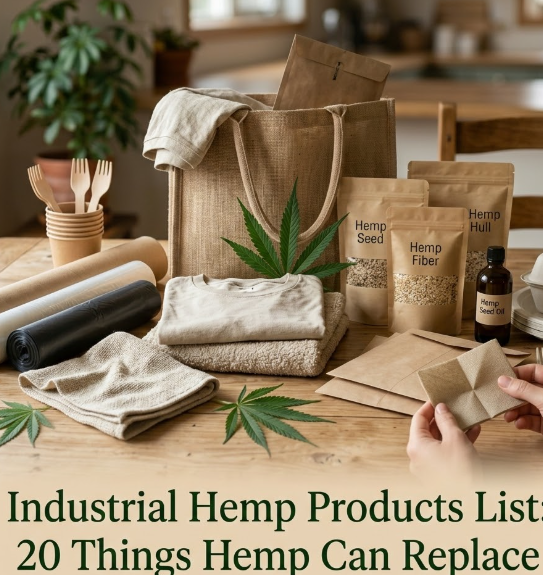
Industrial Hemp Products List: 20 Things Hemp Can Replace
When people hear “hemp alternatives” for everyday items, they often picture something niche, pre

