

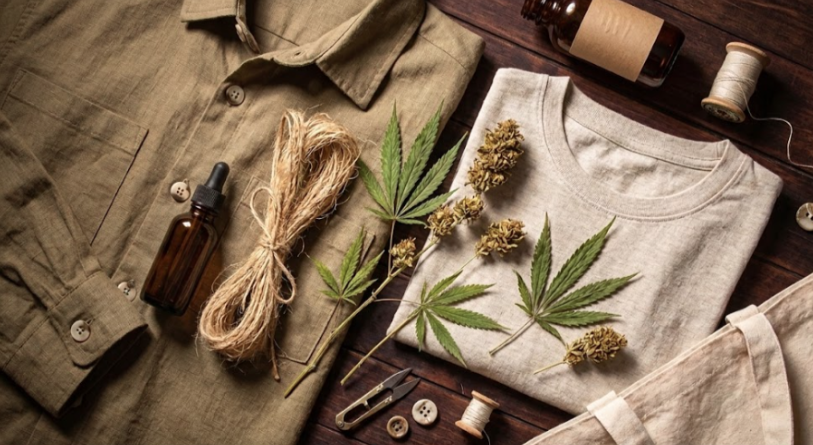
State of the Hemp Fabric Market in India (2026)
India is a global leader in textiles and yarn manufacturing. Currently, the textile industry is entering a period of significant change as environmental concerns have increased demand for sustainable materials
That is why the hemp fabric market in India deserves serious attention in 2026. But hemp is not yet a mainstream textile fibre here.
As the shift happens, and India’s textile industry looks beyond cotton and polyester, we look at the state of the hemp fabric market in India.
What is the current state of the hemp fabric market in India?
The hemp fabric market in India is early, active, and still uneven.
Hemp fabric is used today, but it is not competing with cotton, polyester, viscose, linen, or jute on a mass scale. It is still a niche material, mostly seen in:
- Premium Apparel
- Sustainable Fashion
- Accessories
- Home Textiles
- Export-Led Sourcing
- Experimental Fabric Blends
This does not mean the market is weak. It means the market is not mature yet.
The wider industrial hemp market in India is showing strong growth signals. Some market estimates place India’s industrial hemp revenue at $219 million in 2024. It is projected to reach $950 million by 2032. But the textile part of that market is still small compared with India’s broader textile and apparel industry.
That distinction matters.
A growing hemp industry does not automatically create a strong hemp textile industry in India. Fabric needs a reliable fibre. Fibre needs licensed cultivation. Textile-grade yarn requires proper retting, decorticating, cleaning, and spinning.
At this moment, the market is not short of interest but lacks consistency.
That is where the next phase begins: demand is no longer only ideological. It is becoming practical.
Why is the demand for hemp fabric growing in India?
The demand for hemp fabric in India is growing as buyers increasingly seek sustainable material choices.
Fashion brands are under pressure to reduce their dependence on high-impact fibres. Consumers are more open to natural, durable, and breathable fabrics. Export buyers are looking for suppliers who can support sustainability goals without compromising quality.
Hemp is a perfect fit because it is strong, breathable, robust, and eco-friendly.
But hemp also has a practical problem. Pure hemp feels coarse if it is not processed well. That is why blends are becoming important. Hemp-cotton, hemp-bamboo, hemp-lyocell, and hemp-silk blends can improve softness, drape, and everyday wearability.
This helps brands introduce hemp without asking customers to accept a fabric that feels unfamiliar.
The sustainable textile market in India is also changing. Earlier, sustainability was often treated as a marketing label. Now buyers are asking tougher questions:
- Where did the fibre come from?
- Was it grown legally?
- Can the supplier repeat the same quality?
- Is the claim traceable?
- Can the fabric pass testing?
This is good for serious players. It filters out surface-level claims and rewards supply-chain depth.
So yes, eco-friendly textiles in India are a growing space. But hemp will grow only if it proves itself as a reliable textile, not just a green idea.
That brings us to the trends shaping the sector.
What trends are shaping the hemp textile industry in India?
The hemp textile industry in India is still being built. Here are five clear trends that can be observed:
First, blends are becoming the bridge to wider adoption.
Pure hemp has strength and durability, but blends make it easier for brands to use. A hemp-cotton shirt, a hemp-bamboo dress, or a hemp-lyocell fabric can feel softer while still carrying the sustainability story of hemp.
Second, sustainable fashion is creating early demand.
Brands in India are experimenting with hemp for shirts, trousers, stoles, bags, jackets, and home textiles. The market is still concentrated in conscious fashion and premium categories, but that is often how new materials begin.
Third, export buyers are watching India.
India already has textile manufacturing strength. If the hemp value chain improves, the country can become a sourcing base for global brands looking for natural fibre alternatives.

Fourth, innovation in natural fibre is gaining momentum.
For years, the textile conversation was dominated by cotton and synthetics. Now the natural fibre market in India is expanding to include hemp and other plant-based fibres.
Fifth, policy clarity will decide the speed of growth.
No fabric market can scale if farmers and buyers are unsure about cultivation rules, movement permissions, and testing.
So the future of hemp textiles in India depends on both market demand and policy confidence.
The next question is whether the supply chain can keep up.
How strong is India’s hemp fabric supply chain?
India has textile capability. Hemp needs a more specialised chain.
A strong hemp fibre market in India begins long before fabric. Here is a look at the supply chain:
This is where India still has work to do.
The country has strong spinning, weaving, dyeing, and garmenting capacity. But hemp is a tough bast fibre. It cannot be treated exactly like cotton. It needs the right retting, fibre opening, cleaning, and spinning technology.
For global buyers, the issue is not just whether hemp fabric suppliers in India exist. The issue is whether they can give the same quality repeatedly.
Buyers look at:
- GSM
- Shrinkage
- Tensile Strength
- Colour Fastness
- Softness
- Dye Uptake
- Fibre Origin
- Certifications
This is where sustainable fabric suppliers in India need to become more technical. At Hemp Foundation, we look at hemp not as a fabric story alone. We see it as part of a wider material shift where agriculture, industry, and sustainability must work together.
That is why policy becomes a market issue, not only a legal issue.
What policy issues affect the industrial hemp market in India?
The industrial hemp market in India is shaped by both the NDPS framework and state-level licensing.
The important point is simple: industrial hemp is not the same as narcotic cannabis. But because both come from the cannabis plant, cultivation is closely controlled.
For textiles, the key issue is fibre. States can permit and regulate cultivation for industrial purposes such as fibre and seed. In practice, this means farmers and processors need clarity on:
- Approved Varieties
- THC Limits
- Licensing
- Testing
- Procurement
- Transport
- Buyer Linkages
Uttarakhand has been one of the most important states in this story. It has used state powers to permit industrial hemp cultivation with THC limits and testing systems. The state also has Himalayan growing conditions that can support hemp cultivation.
Himachal Pradesh has also moved towards controlled cultivation pilot projects. This shows policy interest is spreading, but it is still cautious.
For the hemp fabric market in India, the policy must reduce uncertainty without weakening compliance.
The industrial hemp market in India cannot be built on confusion. It needs rules that farmers can follow, and investors can trust.
What is the 2026 outlook for the hemp fabric market in India?
The hemp fabric market in India is promising, but it is not mature.
2026 is not the year hemp becomes a mass-market textile in India. It is the year where capability matters.
The market can grow if these factors improve together:
- Policy Clarity
- Farmer Participation
- Fibre Processing
- Quality Standards
- Export Readiness
The future of hemp textiles in India will not be built by storytelling alone. It will be built by reliable fibre, tested fabric, clear rules, and serious supply chains.
Frequently Asked Questions
What is the demand for hemp fabric in India?
The hemp fabric market in India is currently on an upswing. Though the market remains small in absolute terms, there is an expectation of double-digit growth over the next decade.
Why is the demand for hemp fabric growing in India?
Customers are gradually turning away from fast fashion. Many are looking for sustainable choices and low-impact natural fabrics. This is why the sustainable textile market in India is growing.
Is hemp fabric legal in India?
It is perfectly legal, like cotton and jute. Under the NDPS Act, it is illegal to cultivate hemp plants that have a THC content of above 0.3%. The fiber of the industrial hemp plant can be processed without any legal hurdle.
What is the outlook for India’s hemp fabric market in 2026?
It remains optimistic, though there are a few bottlenecks. More states have to offer licenses for hemp cultivation and processing. Besides, there is an urgent need for investment in upgrading processing facilities.
What are the biggest opportunities in India’s hemp textile industry?
India is already a leader in yarn and textile manufacturing. It is, but a step from there to produce apparel made of natural fibers like hemp. This can be done with minimal adjustment to existing production lines.
For this reason, India can become a global leader in the hemp textile industry.

Vishal Vivek
Vishal Vivek is the Founder and CEO of Ukhi, a pioneering bio-materials company dedicated to ending plastic pollution by converting agricultural waste into high-performance compostable polymers. With a background in sustainable entrepreneurship and over a decade of technology experience, he leads Ukhi’s vision to create scalable, planet-positive material solutions. Previously, Vishal founded the Hemp Foundation, where he empowered more than 1,000 farmers and advanced sustainable livelihood initiatives. His work has been recognized through awards such as the HDFC Parivartan Grant and featured in leading publications like Forbes and Entrepreneur. Times Group recognized him as a legendary entrepreneur and published his biography in “I Did IT- Vol 2” alongside social pioneers like Bindeshwar Pathak (Sulabh International) and Anshu Gupta (Goonj). Vishal has authored more than 200 articles on sustainability and hemp, reflecting his deep expertise and advocacy for regenerative solutions. His commitment to grassroots impact led him to live in the remote mountains of Uttarakhand, where he immersed himself in the lives of marginal farmers, understanding their challenges and co-creating economic opportunities through hemp-based initiatives. A deeply passionate innovator, Vishal often draws inspiration from seemingly impossible achievements: “If Elon Musk can make rockets reusable, or Dashrath Manjhi can carve a path through a mountain with rudimentary tools, why can’t we eliminate the demon of single-use plastic while uplifting struggling farmers? We will make it happen—whatever it takes.” Ukhi is proud to be supported by premier institutions including IIT Guwahati, NSRCEL-IIM Bangalore, Indian School of Business (Hyderabad), Indian Council of Agricultural Research (ICAR Pusa), and the Indian Institute of Packaging. Vishal is committed to demonstrating that business can be a powerful catalyst for global environmental and social good. Connect with Vishal Vivek
Related Posts
Why Should You Give Up Single-Use Masks Immediately?
As you read this, something ugly is going on a the coast near you. Hundreds of thousands of single-u
Top 10 Hemp Startups in the USA
While hemp startups in the USA seem rather contemporary, hemp has played an important role in the hi
How Adoption of Hemp paper packaging can stop cutting of billions of trees a year
Conventional paper packaging is touted as a clean way of packing stuff. The common perception is tha

