

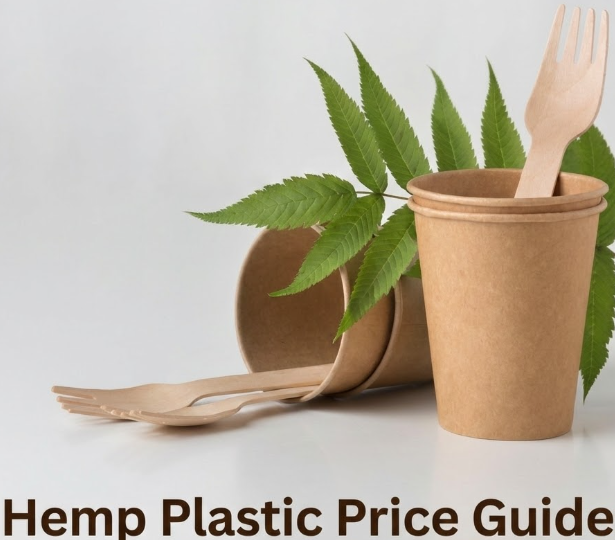
Hemp Plastic Price Guide: What You Need To Know
If I told you that plastic is convenient, you would probably not deny. If I told you that our environment is paying a heavy price for the sake of ‘convenience’, you would nod in agreement.
Plastic was made for ease of use. It was certainly not made for sustainable impact.
It is cheap, durable, strong, the ‘perfect’ industrial material.
Now, plastic has become a liability. Microplastics have infiltrated food, air, even our bloodstream.
As industries scramble to find a placeholder, hemp plastic has begun to stand out. It is made out of sturdy hemp plants. Durable, strong, customizable, biodegradable, affordable, these bio plastics check all the boxes.
Did I mention the word “affordable”? Yes, let us proceed to address the elephant in the room, what is the real hemp plastic price? Can it compete commercially?
The global market: trend or transformation?
The hemp plastic market is growing fast. It is making a mark in the global sustainable materials economy.
If you look at the current market projections, the hemp-based packaging sector is valued at USD 287.5 million. Add to that a 13.3% CAGR (expected through 2035), it potentially exceeds USD 1 billion.
What is driving this growth?
- The rise of ESG commitments
- Global bans on single-use plastic
- The sustainability movement
- Innovation in the bio-plastic sector
Hemp plastic is emerging as a practical choice for a variety of industries. Examples: healthcare, personal care, e-commerce packaging, FnB, and more.
The arguments regarding sustainability hits home. Meanwhile, the hemp plastic price still determines how quickly it gets adopted by industries.
Hemp plastic price overview by region
The hemp plastic cost varies by regions. It is shaped by regulations and supply chain management. Sprinkle the production scale on top of that, and you get the whole picture.
Let us look at how major markets compare:
What Influences Hemp Plastic Cost?
Behind every price tag is a web of interdependent factors.
Raw Material Quality
The hemp plastic price increases with fiber quality. Organically grown hemp yields stronger cellulose, which improves plastic strength and biodegradability.
Manufacturing Scale
Industrial plants can produce hemp plastic at lower cost per unit. Smaller producers focus on niche, high-margin markets.
Product Composition
Pure 100% hemp plastic is costlier than blended materials (e.g., 85% hemp with 15% PLA). The balance affects strength and flexibility. It also contributes to hemp plastic price per kg.
Regional Regulations
EU and UK regulations demand certification, adding upfront costs but ensuring market trust. India’s flexible laws keep hemp plastic cost per ton lower.
Supply Chain & Logistics
Hemp cultivation, transportation, and processing infrastructure differ by region. India’s logistical advantage in Asia-Pacific helps reduce hemp bioplastic pricing for exports.
Industrial applications driving hemp plastic demand
Hemp plastic is finding mainstream use across industries:
- Packaging: Biodegradable bottles, straws, and wraps for F&B and cosmetics.
- Construction: Hempcrete blocks and insulation materials.
- Automotive: Hemp-reinforced interior panels, dashboards, and trims.
- Textiles: Hemp-based yarns and biocomposites.
- 3D Printing: Hemp filaments offering rigidity and reduced carbon footprint.
The EU industrial hemp market is expected to rise from USD 3.6 billion in 2025 to USD 20.44 billion by 2033, showing clear momentum.
For B2B buyers, this means hemp plastic suppliers are scaling fast. The hemp plastic cost will gradually decrease with increase in efficiency.
Cost vs. value: the strategic view
Yes, hemp plastic price/kg is currently higher than traditional plastics. But in long-term commercial terms, hemp plastic is cheaper than inaction.
Here’s why:
Regulations:
With single-use plastic bans expanding across the EU and India, hemp plastics future-proof businesses against penalties.
Brand Value:
Consumers are rewarding sustainability. “Compostable packaging” is a profitable selling point.
Lifetime Savings:
Lower waste disposal costs and potential carbon credits offset the upfront hemp plastic cost.
ESG Advantage:
Investors and corporate buyers favor suppliers using certified hemp-based materials.
In short, the price of hemp plastic is temporary. The value is permanent.
Regional synergies: UK-EU-India partnerships
The future of hemp plastics lies in collaboration.
UK and EU markets bring advanced manufacturing and compliance frameworks. India offers abundant raw hemp fiber and competitive hemp plastic cost.
Together, they create a cross-regional value chain where sustainability meets scalability.
British and European firms sourcing from Indian hemp plastic suppliers not only reduce procurement cost but also strengthen their ESG and import compliance strategies.
Partnerships like this are emerging steadily in packaging and textiles, where Indian raw material is processed in the EU under strict compostability standards, creating a reliable and affordable hemp plastic supply chain.
Challenges that still remain
Transitioning from petroleum to plant-based materials will take time.
- Production Infrastructure: Limited access to hemp processing units keeps hemp plastic prices volatile.
- Technology: Specialized extrusion and molding equipment is still developing.
- Regulatory Ambiguity: Differing industrial hemp laws can delay imports and exports.
- Consumer Awareness: Market education about hemp plastic products remains a bottleneck.
These are challenges of scale. As capacity builds, hemp plastic cost per kg will drop, just as renewable energy prices did over the past decade.
What does the future of hemp-plastic look like?

Alt text: Sustainability: Reuse-recycle
The global hemp fiber market, projected to reach nearly USD 19.7 billion by 2033, is going to transform how we manufacture, and package.
By 2030, hemp plastic cost is expected to stabilize at levels competitive with PLA and other bioplastics, especially as biomass production expands in India and China.
Hemp bioplastic technology is also evolving fast: new polymer blends, enhanced biodegradability, improved heat tolerance, and more. These make it viable for automotive and electronics packaging.
In short: the business case for hemp plastics is no longer about “if.” It’s about “how soon.”
Conclusion: The True Price of Change
The hemp plastic price you pay today is the investment you make for future markets.
Sourcing from India is cost-effective, and strategically sustainable. This enables you to integrate hemp plastic products into profitability with purpose.
As the world moves from fossil to fiber, hemp plastic stands at the center of that transformation.
FAQs
1. What is the average hemp plastic price in 2025?
The average hemp plastic price ranges from ₹80-₹100/kg in India to €250-€300/kg in Europe.
2. Why is the hemp plastic cost higher than regular plastic?
Because hemp plastic is produced by processing organic raw materials. This is compensated by lower compliance fees along with maintaining sustainability.
3. Which country offers the lowest hemp plastic cost for B2B buyers?
India currently offers the most competitive hemp plastic cost.
4. How does hemp plastic pricing vary by industry?
Hemp plastic price per kg is lowest for packaging-grade materials and highest for advanced composites used in automotive and construction sectors.
5. Will hemp plastic cost decrease in the future?
Yes. As large-scale cultivation, R&D, and government incentives expand, global hemp plastic cost is expected to fall by 10-15% over the next five years.

Vishal Vivek
Vishal Vivek is the Founder and CEO of Ukhi, a pioneering bio-materials company dedicated to ending plastic pollution by converting agricultural waste into high-performance compostable polymers. With a background in sustainable entrepreneurship and over a decade of technology experience, he leads Ukhi’s vision to create scalable, planet-positive material solutions. Previously, Vishal founded the Hemp Foundation, where he empowered more than 1,000 farmers and advanced sustainable livelihood initiatives. His work has been recognized through awards such as the HDFC Parivartan Grant and featured in leading publications like Forbes and Entrepreneur. Times Group recognized him as a legendary entrepreneur and published his biography in “I Did IT- Vol 2” alongside social pioneers like Bindeshwar Pathak (Sulabh International) and Anshu Gupta (Goonj). Vishal has authored more than 200 articles on sustainability and hemp, reflecting his deep expertise and advocacy for regenerative solutions. His commitment to grassroots impact led him to live in the remote mountains of Uttarakhand, where he immersed himself in the lives of marginal farmers, understanding their challenges and co-creating economic opportunities through hemp-based initiatives. A deeply passionate innovator, Vishal often draws inspiration from seemingly impossible achievements: “If Elon Musk can make rockets reusable, or Dashrath Manjhi can carve a path through a mountain with rudimentary tools, why can’t we eliminate the demon of single-use plastic while uplifting struggling farmers? We will make it happen—whatever it takes.” Ukhi is proud to be supported by premier institutions including IIT Guwahati, NSRCEL-IIM Bangalore, Indian School of Business (Hyderabad), Indian Council of Agricultural Research (ICAR Pusa), and the Indian Institute of Packaging. Vishal is committed to demonstrating that business can be a powerful catalyst for global environmental and social good. Connect with Vishal Vivek
Related Posts
While India sleeps, West’s hemp entrepreneurs make millions
Isn’t it funny… how sometimes we don’t appreciate what’s in our own backyard…
Water Consumption of the Fashion Industry, At Different Stages? How cutting It Down can Impact the Lives of people
Water Footprint of the Fashion Industry and a Way to Reduce It When buying clothes, people rarely th
210-year-old history of Uttarakhand’s Self Employment related to Commercial Cannabis Cultivation
Uttarakhand is the first state in the country to commercialize the cultivation of industrial hemp by

