

Hemp Granules vs Other Agri-Waste Bioplastics (Wheat Straw, Bagasse, Corn)
India generates an estimated 500–550 million tonnes of agricultural waste every year. A small proportion of that waste is now being turned into plastic alternatives. That helps tackle both plastic pollution and agricultural waste at the same time.
But not all agri-waste bioplastics are created equal.
Hemp bioplastic is one option gaining attention. Other options include wheat straw bioplastic, bagasse bioplastic and corn starch plastic too. So, you need to know which one makes the most sense for your business.
Below we compare agricultural waste plastics to help you find the right fit.
What Counts as an Agri-Waste Bioplastic?
Agri-waste bioplastics are made using agricultural residues, plant-derived ingredients or both. Some materials use agricultural residues as fillers. Others rely on plant-based polymers to form the main structure. That difference affects strength, heat resistance, processing, cost and end-of-life options.

Note: Agricultural waste does not automatically make a plastic biodegradable or compostable. So check material specifications for compostability and biodegradability.
Hemp Granules vs Corn-Starch (PLA) Bioplastic
Hemp granules contain hemp fibres or other hemp-derived material blended with a polymer. Corn starch plastic is used to produce PLA, a polymer made from plant-derived sugars.
The most important point in the hemp vs corn starch bioplastic is that the materials are often not direct substitutes. Hemp granules are a formulation-specific feedstock, whereas PLA is a polymer family. So, fair comparisons need finished materials with comparable specifications.
Hemp vs Wheat-Straw Bioplastic
Wheat straw is a residue left after harvesting wheat. Like hemp stalks, it contains plant fibres used to reinforce a polymer or form part of an agri-waste composite. The final performance depends on fibre preparation, particle size, polymer compatibility and the formulation used.
Fibre quality and consistency are worth checking early. They can affect how easily a material runs through production and how the finished product performs.
Hemp vs Bagasse (Sugarcane) Bioplastic
Bagasse is the fibrous residue left after sugarcane is crushed to extract its juice. It is generated in large quantities by sugar-processing operations.
Studies of bagasse-reinforced PLA show that adding bagasse changes mechanical, thermal and moisture-related properties. The results depend on the proportion of bagasse and whether the fibres receive suitable treatment.
Strength, Cost and Compostability Compared
Now, let’s compare all four options across key factors that affect material selection.
Note: Compostability needs evidence. The Biodegradable Products Institute’s certification information explains how commercial and home compostability differ. A plant-based ingredient alone does not establish that a product meets either standard.
Which Agri-Waste Bioplastic Wins for Your Use Case?
There is no single agri-waste bioplastic that works for all applications.
- If you need a ready-to-process compound, consider hemp granules.
- If you need a commercially established bio-based polymer, evaluate corn-starch-derived PLA grades
- If wheat straw is readily available locally, explore wheat straw bioplastics
- If your factory has access to sugarcane residues, look at bagasse bioplastics
Overall, the best agricultural waste plastic is the one that meets your product requirements, works reliably on your production line and has a credible end-of-life route.

If you are unsure whether hemp granules fit your product, our team can help make the choice. Visit Hemp Foundation for hemp bioplastic comparisons, samples, and helpful insights for achieving your brand’s green goals.
FAQs
1. Can agricultural waste plastics be used for food packaging?
Food-contact compliance depends on the bioplastic’s formulation, intended food contact, migration testing and applicable regulations. Food safe agri-waste bioplastics will always have the relevant certifications available.
2. Can I use hemp granules in my existing plastic moulding machine?
Yes, you can. Many grades of hemp granules work with standard injection-moulding or extrusion equipment. Reach out to our team and request a sample to assess if it will work with your tooling.
3. How can I verify a supplier’s environmental claims?
Request the material’s composition, relevant test reports, and certification documents. Also look for supporting evidence for any biodegradability or carbon-footprint claims. Check that certifications apply to the exact material grade you intend to buy.
4. Are agricultural waste plastics cheaper?
Not always. Sure, agricultural residue is inexpensive at the source. But collection, transport, cleaning, drying, fibre treatment and compounding add costs.
5. What should I request before ordering a commercial batch?
Before placing commercial orders, look at the technical data sheet, safety documentation, and recommended processing conditions. Also, ask about minimum order quantities and lead times. Get in touch with our team to get your sample granules.

Vishal Vivek
Vishal Vivek is the Founder and CEO of Ukhi, a pioneering bio-materials company dedicated to ending plastic pollution by converting agricultural waste into high-performance compostable polymers. With a background in sustainable entrepreneurship and over a decade of technology experience, he leads Ukhi’s vision to create scalable, planet-positive material solutions.Previously, Vishal founded the Hemp Foundation, where he empowered more than 1,000 farmers and advanced sustainable livelihood initiatives. His work has been recognized through awards such as the HDFC Parivartan Grant and featured in leading publications like Forbes and Entrepreneur. Times Group recognized him as a legendary entrepreneur and published his biography in “I Did IT- Vol 2” alongside social pioneers like Bindeshwar Pathak (Sulabh International) and Anshu Gupta (Goonj).Vishal has authored more than 200 articles on sustainability and hemp, reflecting his deep expertise and advocacy for regenerative solutions. His commitment to grassroots impact led him to live in the remote mountains of Uttarakhand, where he immersed himself in the lives of marginal farmers, understanding their challenges and co-creating economic opportunities through hemp-based initiatives.A deeply passionate innovator, Vishal often draws inspiration from seemingly impossible achievements: “If Elon Musk can make rockets reusable, or Dashrath Manjhi can carve a path through a mountain with rudimentary tools, why can’t we eliminate the demon of single-use plastic while uplifting struggling farmers? We will make it happen—whatever it takes.”Ukhi is proud to be supported by premier institutions including IIT Guwahati, NSRCEL-IIM Bangalore, Indian School of Business (Hyderabad), Indian Council of Agricultural Research (ICAR Pusa), and the Indian Institute of Packaging.Vishal is committed to demonstrating that business can be a powerful catalyst for global environmental and social good.Connect with Vishal Vivek
Related Posts
Nutritional Analysis of Hemp (Indian Hemp vs US Hemp vs Worldwide)
[vc_row][vc_column][vc_column_text]One of the most studied plants in the world, the hemp plant, is n

Hemp Industry in West Australia to Receive $300m Funding from LCWA
The Legalize Cannabis Western Australia (LCWA) party plans to invest $300 million in the hemp indust
How the Auto Industry Uses Hemp Plastic
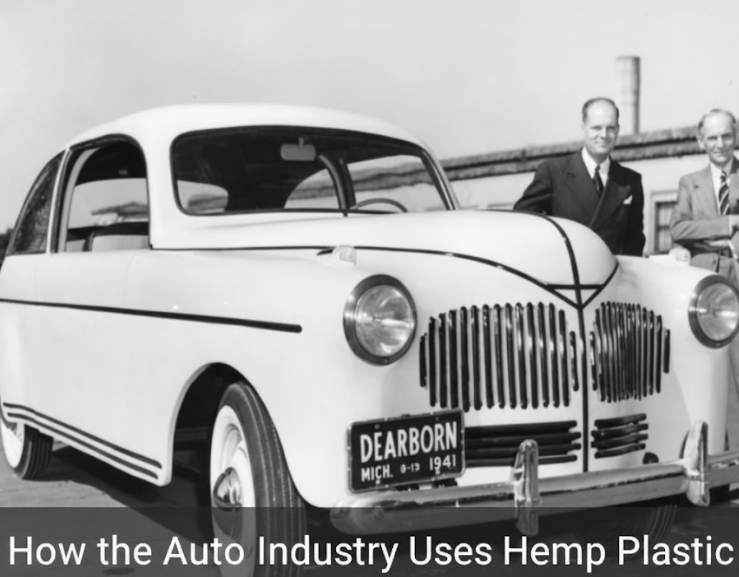
In 1941, Henry Ford built a ‘Hemp Car’. It was the first known hemp plastic automotive i

