

How to Calculate the ROI of Switching to Hemp Packaging
Across India, businesses are starting to rethink how they package their products.
Plastic has been the default for years. It’s cheap, widely available, and easy to work with. But it leaves behind long-term environmental harm. So, there’s growing regulatory pressure as well.
Single-use plastic has already been banned in India since July 2022. And as regulations tighten further, continuing with conventional packaging is becoming a risk.
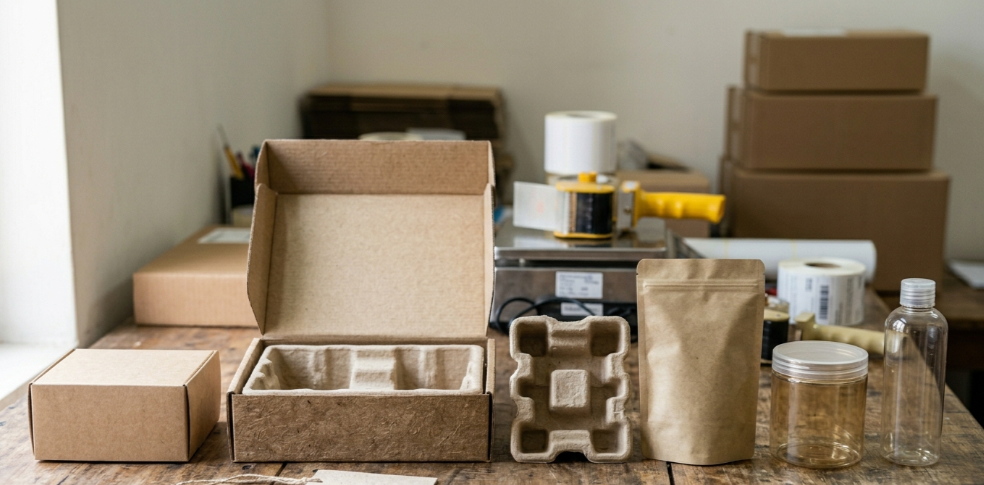
At the same time, eco-friendly alternatives are becoming more accessible. Hemp packaging is one of them. It’s popular among brands that want packaging that feels stronger and more premium than standard paperboard.
But for most small and mid-sized businesses, the concern is straightforward: cost. If hemp packaging looks better, it must cost more.
So the real question is:
Will switching to hemp packaging make financial sense?
Instead of giving a yes or no answer, I’d like to show you how to calculate the hemp packaging ROI so that you can ensure it makes sense for your business.
What changes when you switch to hemp packaging, and why it affects ROI
When businesses think about switching to hemp packaging, the first question is usually about cost.
That is fair. If the packaging costs more, the switch feels risky.
But to understand the ROI of hemp packaging, you first need to understand how hemp packaging is priced. That’s because hemp packaging does not have a single standard rate like plastic often does.
The price depends on three things:
- How it is made
- What it is made for
- How much of it you are buying
So, in this section, we will look at the most common factors that influence pricing. Once these are clear, the cost side of the ROI equation will make more sense.
Why Hemp Packaging Feels More Expensive
In most cases, hemp packaging replaces either petroleum-based plastic or wood-heavy paper packaging. The comparison is crucial here to understand the price difference.
Plastics benefit from decades of scale. Hemp packaging is still scaling. So, prices can vary more across suppliers and grades.
So, when discussing hemp packaging vs plastic pricing, the former feels more expensive. That’s especially true if you are buying at small volumes.
The material grade: what quality level is being used?
The Material Grade Matters Too:
Material grade here simply means quality and consistency. With hemp, the fiber can be:
- More refined and uniform: That offers cleaner, more consistent, and better finish.
- Less refined: That means rougher texture, more variation, and suitable for basic protective packaging.
Higher-grade hemp material usually costs more. That’s because it takes more processing to make it that consistent.
The Number of Units Determines Pricing:
This is the biggest lever. Hemp packaging often has setup costs. That includes things like:
- preparing the cutting shape for boxes
- creating the mold for inserts
- setting up the print run
When you order a small batch, those fixed costs get divided across fewer units. So, the per-unit price looks high. If you buy larger volumes, the per-unit cost usually drops.
This is why hemp packaging ROI can look more impressive at 20,000 units than a 1,000-unit test run.
The cost side of the equation
When sourcing hemp packaging, the pricing conversation usually starts with a quote.
You ask two suppliers for a hemp box or mailer. One comes back at ₹12 per piece. Another comes back at ₹18 per piece. Your current plastic option is ₹10.
At this point, it’s natural to wonder, “Why are these numbers so far apart?”
The pricing changes a lot based on the format, the volume, and the level of finishing. That is why hemp pricing can feel inconsistent if you don’t break it into parts.
Material Cost Difference:
In many formats, hemp-based packaging lands around 15–20% higher than conventional plastic.
The reason for this gap is that plastic runs on a massive scale. Hemp, however, is still building processing capacity.
In some cases, the premium is closer to 10%. In small or specialised formats, it can cross 50%.
Raw Material Pricing in India:
Industrial hemp fibre in India is often quoted at around ₹80–₹100 per kg, depending on processing and consistency. India is relatively competitive because production costs are lower and the ecosystem is growing.
Manufacturing and Scale:
Small runs typically cost more per unit. That’s because suppliers still have fixed setup costs. As volumes rise, per-unit cost drops because those fixed costs get spread across more units.

Customization and Finishing:
Printing, box strength, thickness (GSM), and structural design can raise pricing sharply. In many cases, these choices move the final number more than the hemp content does.
So, what’s the key takeaway here? It’s that hemp packaging can cost more. But how much more depends less on the label and more on format, scale, and finish.
The return side of the equation
If cost is only one side of the decision, the other side is what the business gets back.
And this is the part most businesses struggle with. That’s because the ROI of something like hemp packaging doesn’t come from a single place, and it’s not always immediately obvious.
In most cases, it shows up across customer behavior, pricing, operations, and long-term positioning.
Customers Notice Packaging More Than Before:
Sustainable packaging is no longer a niche preference. Multiple studies show that 70–80% of consumers say they prefer products that have sustainable packaging. And around half are willing to pay a small premium for it.
For a business, this does not automatically mean higher sales. But it does mean packaging is now part of the buying decision.
Packaging Shapes How the Product is Perceived:
When a customer receives a product, packaging is the first physical interaction they have with the brand. Hemp packaging, with its natural texture and sturdier feel, can influence:
- perceived product quality
- trust in the brand
- how differentiated the product feels
This is one of the reasons hemp packaging is already used in categories like apparel, gifting, and wellness.
It Can Support Better Pricing:
In many cases, the return from better packaging shows up in pricing. When a product looks and feels more premium, customers tend to value it differently.
For many brands, especially those that are not competing purely on cost, this can support a 2–5% increase in pricing without much resistance.
This effect is more visible in D2C businesses. Packaging is part of the unboxing experience. And that plays a role in how customers remember the product.
This doesn’t mean packaging alone determines pricing. But it does influence how the product is perceived, and that perception affects what customers are willing to pay.
It Helps with Compliance and Long-Term Risk:
In India, Extended Producer Responsibility (EPR) requirements are already in place. Globally, there is continued pressure to reduce plastic usage.
Using materials like hemp helps businesses stay compliant with regulations. It also supports ESG positioning. And that’s becoming relevant for investor perception and partnerships with larger retailers.
What It Means in Practice:
It means that the ROI of hemp packaging does not come from one metric. It spreads across:
- Revenue: through perception and pricing.
- Cost savings: through reduced damage and efficiency.
- Risk reduction: through compliance and future readiness.
When you look at it this way, the equation becomes clearer. The decision is about what the added spending does for the business over time.
A simple way to think about ROI
You don’t need a formula to understand the ROI of packaging. You just need to look at three simple things.
First, how much does your cost increase? In many cases, switching to hemp packaging might add around ₹2–₹3 per unit, depending on the format and scale.
Second, what it does to your revenue. This can come from a slightly higher selling price or better conversion. When packaging improves how a product is perceived, even a small change in customer response can make a difference.
Third, whether it helps you save costs elsewhere. That could be fewer returns, less product damage, or lower risk of compliance issues over time.
Let’s put this in perspective. Let’s say your product sells for ₹500. Then, a ₹2 increase in packaging cost is less than half a percent.
Now, let’s say you get a small improvement in conversion as a result of the change. Or, you increase the product price by ₹5. This will easily offset the added cost.

A real-world example: How the numbers play out
Take a simple example of a D2C apparel brand.
Before switching, the brand used standard plastic polybags that cost around ₹10 per unit. This is fairly typical across the industry. Return rates in apparel are also relatively high, often in the range of 8–10%.
Now, the brand switches to hemp-based packaging. The cost goes up to around ₹12 per unit, depending on the format and quantity.
At first glance, that’s a ₹2 increase. But look at what happens next.
If the packaging is sturdier and presents the product better, even a small reduction in product returns can make a difference.
In India, reverse logistics for a single product return can cost anywhere between ₹80 and ₹150. So, even a 1% drop in returns can help.
When it may take longer to see ROI
Hemp packaging does not deliver the same kind of return for every business. In some cases, it takes longer for the numbers to make sense.
This is especially true for low-margin categories like FMCG. Here, margins are often under 10%. In these businesses, even a small increase in packaging cost is harder to absorb.
It also applies to commoditized products, where packaging has little influence on buying decisions. If customers are choosing primarily based on price, a change in packaging may not translate into higher sales.
For high-volume businesses, the impact is even more visible. A ₹1 increase per unit can become significant. That’s especially true when it’s scaled across thousands or lakhs of units.
In these situations, ROI depends heavily on two factors: the business’s margin structure and customers’ sensitivity to price.
Conclusion: Where to start if you’re evaluating the switch
If you’re considering hemp packaging, the easiest way to approach it is to start small and test.
Most businesses begin with outer packaging or high-visibility products. This is where the impact is most noticeable.
Don’t switch everything at once. Run a pilot of around 1,000 to 5,000 units first. This is usually enough to understand how it will perform.
If you have a D2C business, you can track changes in conversion or repeat purchases.
At Hemp Foundation, our role in this process is to help businesses make this change as swiftly and seamlessly as possible.
That’s why we develop packaging formats suited to specific use cases. We also make sure the materials we use deliver the best performance.

Vishal Vivek
Vishal Vivek is the Founder and CEO of Ukhi, a pioneering bio-materials company dedicated to ending plastic pollution by converting agricultural waste into high-performance compostable polymers. With a background in sustainable entrepreneurship and over a decade of technology experience, he leads Ukhi’s vision to create scalable, planet-positive material solutions. Previously, Vishal founded the Hemp Foundation, where he empowered more than 1,000 farmers and advanced sustainable livelihood initiatives. His work has been recognized through awards such as the HDFC Parivartan Grant and featured in leading publications like Forbes and Entrepreneur. Times Group recognized him as a legendary entrepreneur and published his biography in “I Did IT- Vol 2” alongside social pioneers like Bindeshwar Pathak (Sulabh International) and Anshu Gupta (Goonj). Vishal has authored more than 200 articles on sustainability and hemp, reflecting his deep expertise and advocacy for regenerative solutions. His commitment to grassroots impact led him to live in the remote mountains of Uttarakhand, where he immersed himself in the lives of marginal farmers, understanding their challenges and co-creating economic opportunities through hemp-based initiatives. A deeply passionate innovator, Vishal often draws inspiration from seemingly impossible achievements: “If Elon Musk can make rockets reusable, or Dashrath Manjhi can carve a path through a mountain with rudimentary tools, why can’t we eliminate the demon of single-use plastic while uplifting struggling farmers? We will make it happen—whatever it takes.” Ukhi is proud to be supported by premier institutions including IIT Guwahati, NSRCEL-IIM Bangalore, Indian School of Business (Hyderabad), Indian Council of Agricultural Research (ICAR Pusa), and the Indian Institute of Packaging. Vishal is committed to demonstrating that business can be a powerful catalyst for global environmental and social good. Connect with Vishal Vivek
Related Posts
The Hemp Era in Uttarakhand – Current Scenario, Challenges and Opportunities
Sounding bugle for an awareness campaign about the economic and environmental advantages of hemp pla
7 Major Fibers & Textiles In The World And Their Carbon Footprint
Ever considered how your clothes affect the environment? All clothes are made of fibers, but h
Here is How Hemp can Keep Climate Change at Bay
Hemp is one of the oldest and most versatile plants known to mankind. Such is its versatility that i

