

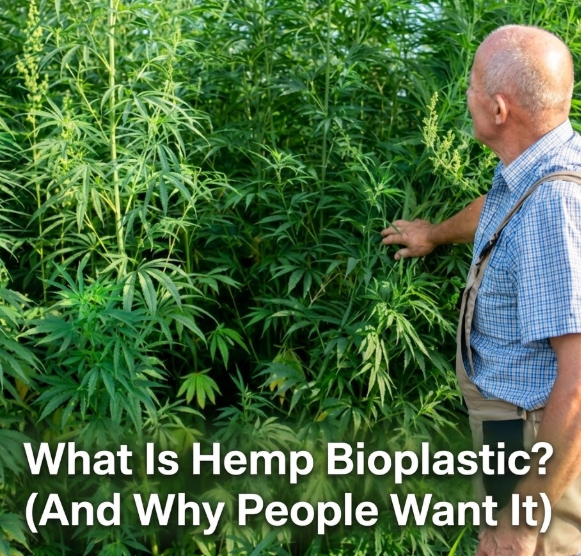
What Is Hemp Bioplastic? (And Why People Want It)
Over the last few years, interest in hemp bioplastics has noticeably grown.
People are becoming more aware of the effects of plastic pollution. As a result, the world is actively searching for practical alternatives. And this shift in public mindset is evident in the numbers.

The global hemp bioplastics market was valued at $83.5 million in 2021. That figure is projected to reach nearly $290 million by 2031. That’s a growth rate of approximately 13% to 14% CAGR.
When you see those kinds of numbers, you know it’s more than just hype.
But why is it happening?
Part of the answer is regulation. Governments in the US, UK, and EU are implementing stricter regulations on plastic waste.
That creates real pressure on policymakers. That in turn creates impetus for companies that make packaging, consumer goods, and clothing to be more eco-conscious.
So, simply choosing a material for price or performance won’t cut it. Businesses would have to think about sustainability as well.
The second part of the story is adoption.
Hemp‑based composites are no longer experimental. Automakers such as BMW, Mercedes, and Lotus already use hemp fiber panels in their vehicles because they are strong, lightweight, and lower in carbon emissions.
Packaging companies are exploring hemp-based materials for trays, films, and containers. But they break down into soil or other organic matter when composted and don’t leave any harmful residues.
To understand why hemp bioplastic adoption matters, we first need to understand the material itself.
Here’s a quick guide on what it is made from, how it is manufactured, and why so many people see it as a credible alternative to conventional plastics.
What is hemp bioplastic? A brief overview
To understand what makes hemp bioplastic stand out, we have to begin with the basics.
Unlike regular plastic, which is made from fossil fuel, hemp plastic is made from the cellulose found in industrial hemp stalks.
Hemp stalks contain around 65% to 70% cellulose. That’s significantly higher than that of many other crops we use for fiber or paper.
This cellulose gives us the building blocks for making hemp biodegradable plastic.
The Process in a Nutshell
The process of making plastic out of hemp starts in the fields. Farmers grow and harvest industrial hemp, then those sturdy stalks go through the following steps:
- Step #1: Carefully extracting and purifying the cellulose.
- Step #2: Mixing the cellulose with natural plasticizers (and depending on the final application), blending it with other biodegradable polymers like PLA or PBAT.
- Step #3: Then, heating and shaping the mixture using the same type of machinery that’s used for making conventional plastic. Various methods like extrusion, molding, or casting are used.
What really separates hemp bioplastic from regular plastic, though, is what happens after it’s discarded.
How is Hemp Bioplastic Different from Regular Plastic?
Traditional plastic is made from petroleum. It’s a resource that takes millions of years to form. When discarded into landfills or oceans, regular plastic can last centuries.
Hemp bioplastic is different in both fronts. It’s renewable because a new crop of hemp can be grown every year. Moreover, under the right conditions, hemp-based plastics can break down in a matter of months.
It’s also capable of locking in carbon, which helps to reduce the overall carbon footprint.
Let’s get a quick snapshot of their main differences:

Modern Applications of Hemp Bioplastic
Hemp bioplastic has several applications. Though adoption is currently limited in the US, UK, and EU, it’s rapidly increasing with time.
Companies have already started using hemp plastic for packaging trays, flexible films, and sturdy containers. The automotive industry is using hemp-based plastic for interior panels and trim.
We are also seeing early adoption in things like biodegradable utensils, reusable bottles, and even eco-friendly 3D printing filaments.
With more innovation in hemp plastic manufacturing, we will surely see the production of more hemp plastic products.
Why do people want hemp bioplastic?
Having been a part of this industry for the better part of a decade, I can say with certainty that this growing curiosity about hemp bioplastic isn’t a passing trend.
Governments around the world are searching for a viable way to reduce plastic pollution. And hemp plastic is earning serious consideration.
So, what’s driving this forward momentum? It’s not a single factor, but a combination of environmental, health, agricultural, and market realities.
The Environmental Benefits
In the hemp vs plastic debate, hemp takes the crown as far as environmental benefits are concerned.
Unlike fossil fuel-based plastics, hemp bioplastic is made from a renewable crop. This crop captures carbon as it grows.
Moreover, as a fast-growing crop, hemp can absorb around 9 to 15 tonnes of CO2 per hectare in just one season. That’s an undeniable plus if you compare it with other plants.
The benefits continue even after hemp is turned into bioplastic:
Biodegradability
Hemp bioplastic is also biodegradable. That means under the right composting conditions, hemp plastic breaks down in just a few months.
Low-input farming
People often point out the agricultural concerns with bioplastics. Things like excessive land and water use, competition with food crops, and soil depletion and erosion are often brought up.
Hemp solves this problem as well. This crop needs less water and minimal pesticides. That reduces strain on soil and water resources.
Reduced carbon footprint
From the field to the final product, hemp plastics generate less greenhouse gas than petroleum-based plastics.
By choosing hemp, we can effectively close the loop that causes persistent pollution.
Health and Safety Factors
Many traditional plastics contain additives such as BPA and phthalates. The same plastic is used in everything from food packaging to children’s toys. Naturally, the risk of exposure to these chemicals is a major concern.
We don’t need to use these chemicals to make hemp bioplastic. So, these are perfect for food containers, utensils, and other everyday products.
When looking for a plastic that’s safer for health by design, hemp is the natural answer.
Support for Sustainable Agriculture
How the raw material is grown matters as well. And hemp is perfect as far as sustainable agriculture is concerned.
Farmers can grow it in rotation with other crops. It helps to improve soil health, prevent soil erosion, and even absorb leftover nutrients.
Integrating hemp bioplastic manufacturing into rural supply chains can benefit local economies and give farmers access to new markets.
Moreover, the manufacturing process makes use of agricultural waste, which would otherwise be discarded or burned.
Market Trends and Consumer Demand
Regulatory changes are taking place in the US, UK, and EU. It’s putting more pressure on businesses to opt for more eco-friendly materials.
At the same time, consumers are increasingly seeking out brands that offer sustainable alternatives.
Because of these, we can see the following changes taking place:
- Investments in hemp-related R&D are growing.
- Brands are launching products made from hemp-based plastics.
- Demand for certified compostable packaging is at an all-time high.
So, it’s undeniable that hemp bioplastic is the best alternative to conventional plastics for environmental reasons. But they help fulfil real business and regulatory needs as well.

Recent innovations in hemp bioplastic manufacturing
Hemp bioplastic manufacturing is a perfect example of how science, farming, and real-world needs can come together. This field is changing fast, and every season we see new ideas move from lab to field to factory floor.
Being able to turn what was once considered waste into a valuable resource has been a real step forward. Traditionally, hemp stalks and hurds were left behind or burned after the seeds and fibres were removed.
Now, those stalks are the starting point of the hemp bioplastic manufacturing process.
There has also been significant innovation in how the cellulose is extracted, purified, and compounded. It has allowed us to blend hemp with other biodegradable polymers.
This way, we can fine-tune the material’s strength and breakdown time.
Since 2019, Hemp Foundation has worked toward bridging the gap between farming and manufacturing.
We have worked with 500+ farmers, offering support and training in growing hemp commercially in clusters. Because of this, rural farming communities have seen a 40% income surge.
We are also making great strides in research and innovation, and are advocating for clear standards and fair regulations.
Food for thought
Whenever we talk about solutions like hemp bioplastic, it’s easy to focus on the science, the numbers, and the case studies.
But sometimes, the more important question is much simpler. What kind of future do we actually want to build?
Materials like hemp bioplastic remind us that nature can be an engineer. That the answers to complex problems may just come from rethinking how we use the resources we already have.
So, as you leave this page, consider one thing. What else might change if we stopped asking “How do we make more?” and started asking “How do we make better?”

Vishal Vivek
Vishal Vivek is the Founder and CEO of Ukhi, a pioneering bio-materials company dedicated to ending plastic pollution by converting agricultural waste into high-performance compostable polymers. With a background in sustainable entrepreneurship and over a decade of technology experience, he leads Ukhi’s vision to create scalable, planet-positive material solutions. Previously, Vishal founded the Hemp Foundation, where he empowered more than 1,000 farmers and advanced sustainable livelihood initiatives. His work has been recognized through awards such as the HDFC Parivartan Grant and featured in leading publications like Forbes and Entrepreneur. Times Group recognized him as a legendary entrepreneur and published his biography in “I Did IT- Vol 2” alongside social pioneers like Bindeshwar Pathak (Sulabh International) and Anshu Gupta (Goonj). Vishal has authored more than 200 articles on sustainability and hemp, reflecting his deep expertise and advocacy for regenerative solutions. His commitment to grassroots impact led him to live in the remote mountains of Uttarakhand, where he immersed himself in the lives of marginal farmers, understanding their challenges and co-creating economic opportunities through hemp-based initiatives. A deeply passionate innovator, Vishal often draws inspiration from seemingly impossible achievements: “If Elon Musk can make rockets reusable, or Dashrath Manjhi can carve a path through a mountain with rudimentary tools, why can’t we eliminate the demon of single-use plastic while uplifting struggling farmers? We will make it happen—whatever it takes.” Ukhi is proud to be supported by premier institutions including IIT Guwahati, NSRCEL-IIM Bangalore, Indian School of Business (Hyderabad), Indian Council of Agricultural Research (ICAR Pusa), and the Indian Institute of Packaging. Vishal is committed to demonstrating that business can be a powerful catalyst for global environmental and social good. Connect with Vishal Vivek
Related Posts
Hemp Plastic Cost: What Drives Price Per Kg and Price Per Product
If you’ve ever asked, “Why is hemp plastic expensive?”, you’re not alone. Most people believ

Cooking with Hemp: A few things worth knowing
It’s good to know how much CBD is in what you’re making. However, there are a lot of variables:
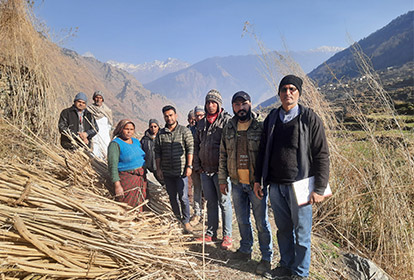
Reverse Migration
Restoring Communities Through Bringing Migrants Back Home High out-migration is a feature of the sta

