

What Can Hemp Plastic Replace? A Room-by-Room Guide
As plastic pollution continues to plague the planet, the search is on for alternatives. Hemp plastic has emerged as a novel material that is a strong contender. It is being adopted as an alternative across the packaging industry for making consumer goods and some industrial components.
But it’s not a one-size-fits-all swap. There are many formulations and pathways to replacing conventional plastic. At this moment, hemp plastic can replace some items, and many only partially. This guide explains what hemp plastic can replace, where it’s promising, and where it will take time to mature as an alternative.
What Is Hemp Plastic?
In plain terms, hemp plastic is not usually plastic made from hemp alone.
Most often, it means a material where hemp is used in one of three ways:
- as a fibre reinforcement
- as a bio-filler
- as part of a biopolymer
- as a cellulose-based blend
That is where understanding what hemp plastic is becomes important. Hemp is not one product. The hemp plant is a raw material that can be turned into fibre, hurd, cellulose, composites, and polymer blends for different industrial uses.
So there is a clear difference between:
- a hemp fibre product
- a hemp composite
- a hemp-based bioplastic
In the market, many products sold as hemp plastic are hybrid materials. They use hemp to replace part of the conventional plastic content. That matters because it affects performance, cost, and end-of-life behaviour.
Once that is clear, the next question becomes much easier to answer: where does it make sense to use hemp plastic first?
What Can Hemp Plastic Replace Easily?
The best early opportunities are usually the simplest ones.
When people think about hemp products, they envision advanced applications. In reality, the first replacements are lower-risk, high-volume products. In these sectors, the technical demands are easily manageable.
It includes:
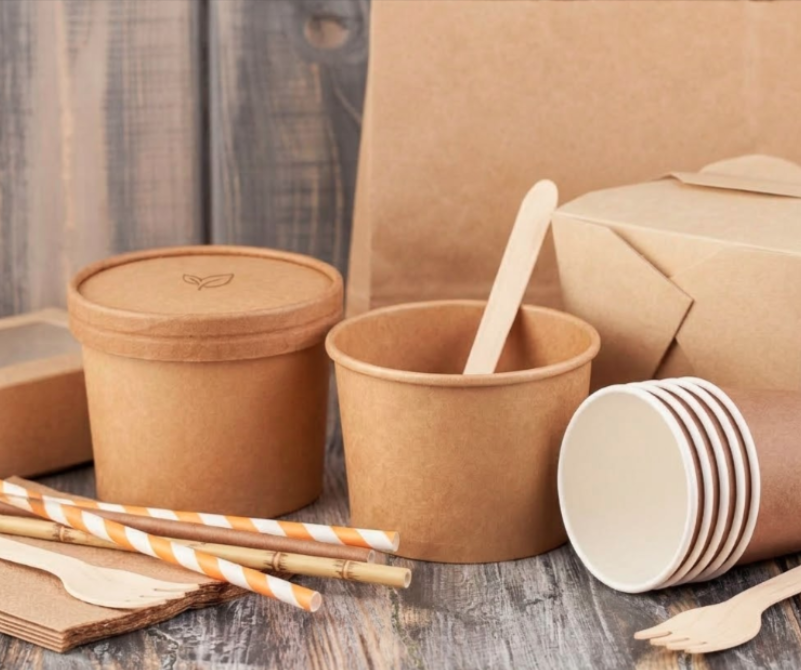
- disposable food-service items
- packaging
- selected bottles and containers
- lifestyle and consumer products

These categories tend to move first for a few reasons. They have visible branding value. They sit under growing regulatory and retail pressure. And they are easier to redesign than highly engineered parts.
So, when we ask what hemp plastic can replace, the honest answer is – the products where moderate performance is enough, and replacing traditional plastic is urgently necessary.
That is why single-use items are one of the first categories worth looking at closely.
Can Hemp Plastic Replace Straws And Other Single-Use Items?
In many places, straws, cutlery, stirrers, plates, and similar items have been directly targeted by single-use plastic regulations. That creates strong demand for alternatives.
Hemp plastic is ideal for making straws, stirrers, cutlery, and other small food-service items. These products are also easier to substitute.
They usually do not need:
- very high heat resistance
- long service life
- complex barrier performance
- heavy structural strength
That makes them easier for brands to test.
However, keep in mind that a hemp plastic straw is only as sustainable as the full formulation behind it. Hemp-filled conventional plastic is very different from a hemp-biopolymer, which composts easily.
From there, the conversation naturally moves to a tougher category: bottles and containers.
Can Hemp Plastic Replace Water Bottles And Containers?
Hemp plastic water bottles sound like a straightforward replacement idea. In practice, bottles are harder than straws because they need a tighter balance of properties:
- strength
- consistency
- barrier performance
- food or beverage compliance
That is why it makes more sense to use hemp plastic in selected rigid packaging formats such as personal-care bottles, jars, tubes, and dry containers. It is not yet a good replacement for beverage bottles with fruit juices and cola drinks.
A bottle containing juice and cola has to survive transport, handling, and storage without leaking or breaking. So, hemp plastic water bottles are best understood today as a developing category, not a universal replacement.
In the next section, we shall inspect packaging using hemp plastic. It is the biggest and most commercially relevant application.
Can Hemp Plastic Replace Packaging?
Globally, packaging accounts for a very large share of plastic production and waste. That is why hemp plastic packaging is one of the most commercially relevant applications being explored today.
But packaging is not one single category. There are many different forms, each with its own performance requirements.
For example:
- Flexible packaging – mailing bags, garment bags, pouches
- Rigid packaging – trays, clamshells, molded containers
- Secondary packaging – inserts, protective packaging, lids, caps
Each of these formats demands different properties.
- A mailing bag needs flexibility and tear resistance.
- A tray needs stiffness and dimensional stability.
- Retail packaging needs printability and shelf presentation.
- Food packaging may require moisture or oxygen barriers.
This is where hemp begins to make sense as part of the material system.
Hemp fibres or hemp-based fillers can be a part of biopolymers. This reduces fossil content while improving stiffness and efficiency. Hemp can function as:
- a reinforcement fibre
- a structural filler
- part of a hemp-biopolymer blend
In fact, many companies working in sustainable materials are already exploring packaging formats such as:
- compostable shipping bags
- molded trays
- protective inserts
- retail packaging components
At Hemp Foundation, we are leaders in manufacturing hemp products in India. These include blown film extrusion, thermoforming, and injection moulding of hemp biopolymer made from agricultural residues.
The picture expands further into everyday consumer goods.
What Else Can Hemp Plastic Be Used For?
Beyond packaging, hemp plastic is increasingly appearing in several products.
These are items where moderate mechanical strength is enough.
Common examples include:
- toothbrush and comb handles
- sunglasses frames
- phone cases and laptop covers
- storage containers and kitchen tools
- small appliance housings
Hemp acts as a reinforcing fibre inside a polymer matrix, helping improve the stiffness of these products. For this reason, the bestselling hemp products tend to be everyday lifestyle items rather than highly technical industrial components.
Another interesting use case is in automotive interiors. Natural hemp fibre composites are used in door panels, interior trims, and dashboards in several models. These components benefit from hemp’s relatively low weight and good stiffness-to-weight ratio. Major automakers like BMW, Mercedes-Benz, Audi, and Ford are using hemp plastic to replace fiberglass.
Yet another application is in 3D printing. Hemp-filled PLA filaments are being used for prototyping parts and small components.
The Road Ahead For Hemp Plastic
As I have shared, hemp plastic can replace several categories of plastic products. In a few short years, the material has moved from a theoretical solution to a functional replacement. Further adoption is on its way as research matures and newer applications are found.
At the same time, the global supply chain for hemp products is improving as the cultivation of industrial hemp spreads. Hemp products may not replace every plastic item in our lives tomorrow, but it is a promising material in the coming post-petroleum era.
Frequently Asked Questions
How can hemp products replace traditional plastic?
Hemp products are 5 times stiffer and 2.5 times stronger than conventional plastic. This makes it ideal for:
- Packaging industry – bags, mailers, and inserts
- Automotive industry – door panels and dashboards
- Common household products like toothbrushes and combs
- 3D printing filaments
These are the bestselling hemp products both in India and across the world.
What are the benefits of hemp plastic?
The biggest benefit of hemp plastic is that it is renewable. Hemp grows quickly without needing a lot of water. It absorbs several tons of carbon dioxide and requires almost no pesticides. It is an ideal material for overcoming the dependence on conventional plastic.
Is hemp plastic biodegradable?
Yes, it is completely biodegradable since it is organic in nature. However, the rate at which it is composted depends on the percentage of hemp. Typically, hemp plastic breaks down in 3-6 months in an industrial composting facility.
Is hemp plastic more expensive than regular plastic?
At this moment, hemp plastic is between 2 and 4 times more expensive. But keep in mind that it is a new industry. In the 1940s, conventional plastics cost the same as hemp plastic does today (inflation-adjusted). As the supply chains mature and greater adoption happens, the price will drop dramatically.
How does hemp plastic compare to other bioplastics like PLA?
It outperforms PLA in structural strength. It is also better at biodegradation in natural environments. But at the moment, PLA is cheaper and thus has more demand.

Vishal Vivek
Vishal Vivek is the Founder and CEO of Ukhi, a pioneering bio-materials company dedicated to ending plastic pollution by converting agricultural waste into high-performance compostable polymers. With a background in sustainable entrepreneurship and over a decade of technology experience, he leads Ukhi’s vision to create scalable, planet-positive material solutions. Previously, Vishal founded the Hemp Foundation, where he empowered more than 1,000 farmers and advanced sustainable livelihood initiatives. His work has been recognized through awards such as the HDFC Parivartan Grant and featured in leading publications like Forbes and Entrepreneur. Times Group recognized him as a legendary entrepreneur and published his biography in “I Did IT- Vol 2” alongside social pioneers like Bindeshwar Pathak (Sulabh International) and Anshu Gupta (Goonj). Vishal has authored more than 200 articles on sustainability and hemp, reflecting his deep expertise and advocacy for regenerative solutions. His commitment to grassroots impact led him to live in the remote mountains of Uttarakhand, where he immersed himself in the lives of marginal farmers, understanding their challenges and co-creating economic opportunities through hemp-based initiatives. A deeply passionate innovator, Vishal often draws inspiration from seemingly impossible achievements: “If Elon Musk can make rockets reusable, or Dashrath Manjhi can carve a path through a mountain with rudimentary tools, why can’t we eliminate the demon of single-use plastic while uplifting struggling farmers? We will make it happen—whatever it takes.” Ukhi is proud to be supported by premier institutions including IIT Guwahati, NSRCEL-IIM Bangalore, Indian School of Business (Hyderabad), Indian Council of Agricultural Research (ICAR Pusa), and the Indian Institute of Packaging. Vishal is committed to demonstrating that business can be a powerful catalyst for global environmental and social good. Connect with Vishal Vivek
Related Posts
Top Hemp Plastic Manufacturers in the UK
Did you know the UK is now home to more than 1,000 hectares of industrial hemp farms? This number ha
Hemp Textile Market, Growth, Outlook and Other Trends
Hemp: A natural fiber made from the Cannabis sativa plant is increasingly being used in fashion as a
Best Hemp Plastic Products to Buy Online (2026) in USA
There’s never been more noise in the world of hemp plastic products. Some are genuinely sustainabl

