

Hemp Plastic in the EU: State of the Market & Policy
Europe has been a beacon of change for several hundred years.
European explorers, Columbus, Vasco da Gama, reached the Americas and India, and Newton and Galileo gave us a new understanding of the universe.
Now the EU is at the forefront of another major change.
The continent is pursuing an ambitious goal to attain a circular, climate-neutral economy by 2050. There is less than a quarter of a century left to complete this vast transformation. Time is of the essence, and developing sustainable practices is a must.
This has renewed interest in the EU about hemp and hemp plastic and made it the center of a material revolution. Let’s dive in and see why so many people in Europe are interested in hemp plastic right now.
Why Is Hemp Plastic Gaining Momentum in the European Union?
Across Europe, there is growing pressure to rethink plastics. The impetus comes from regulation, industry needs, and changing consumer habits. All three are now moving in the same direction.
Several factors explain why hemp plastic is gaining attention in the EU:
- Policy measures such as the Single Use Plastics Directive require a move away from traditional plastics.
- The EU is committed to a circular economy that keeps materials in use and reduces waste.
- The EU Green Deal targets climate neutrality by 2050, pushing every sector to cut emissions.
- There is also pressure from the grassroots. The EU’s large consumer base of over 500 million creates significant “green demand”.
Because policy and market forces are now aligned, businesses are moving quickly. This has created a rare window where bio-based materials like hemp plastic can scale.
How Big Is the Hemp Plastic Market in Europe Today?
It’s important to look at real numbers, and they are quite impressive.
- The European industrial hemp market is already valued at about $2.9 billion in 2024. It is expected to grow to over $20 billion by 2033.
- Now let’s zoom in on the hemp bioplastics market (including composites and packaging). That segment is worth $125 million in 2025 and is expected to double to $268 million by 2032.
- Packaging is expanding even faster. The European hemp-based packaging market is valued at about $287 million in 2025. It will likely top $1 billion by 2035.
Here’s a quick table for a clear picture of hemp plastics demand in the EU:
It is safe to say the demand for hemp plastic and its variations in the EU will grow at 7 – 11% over the next decade. The European Union’s total GDP is around $19 trillion, making it one of the wealthiest regions of the world. This level of growth for hemp plastic in the EU is, therefore, indeed welcome.
Which EU Countries Lead Hemp Plastic Production and Processing?
Not all EU countries play the same role. A few have taken a clear lead.
- France stands at the front. In 2022, France produced 121,000 tonnes of hemp. That is three-quarters of all EU hemp output.
- It is followed by Germany. With about 17 percent of EU output, Germany combines hemp cultivation with expertise in manufacturing composites.
- Not as impressive in absolute terms, the Netherlands is growing fast. The tiny nation from Northwestern Europe has increased hemp cultivation by 74% between 2023 and 2024.
- Lithuania also plays a key role. It has the largest vertically integrated hemp fiber processor in the Baltic region. Operations cover farming, processing, and finished products.
Together, these countries form a strong base for hemp supply and processing.
What Are the Main Applications of Hemp Plastic in Europe?
The supply side is impressive, but what about demand? How is hemp plastic being used in the EU?
Let’s see what products are being made with hemp plastic in Europe today.
Automotive and Industrial Composites
Hemp plastics and composites are a better alternative for making vehicles. Hemp composites are 44% lighter than glass-fiber ones. It is also five times stiffer and 2.5 times stronger than regular polypropylene.
Many European carmakers have already integrated hemp plastics in their production:
- BMW uses hemp plastic in the 7 Series and i-models to reduce carbon footprints.
- Mercedes-Benz uses hemp-reinforced plastics for internal structures in the E-Class.
- Porsche utilized hemp composites in the 718 Cayman GT4 Clubsport.

Porsche 718 Cayman
From Wikimedia
Packaging and Molded Fiber Products
European companies are leading the way in using hemp plastics for sustainable packaging.
- PAPACKS of Germany has established a scalable industrial supply chain for certified hemp-molded fiber. It receives feedstock from Ukraine.
- From Italy, LATI Industria is providing hemp-reinforced bioplastics like Hemp PLA and HDPE across the European Union.
- Unyte Hemp, based in the UK, has developed specialized hemp-based fiber solutions. It has the goal of becoming the central resource for all things related to hemp plastic in the EU.
- Biome Bioplastics, also based in the UK, has made excellent compostable polymers by integrating hemp cellulose into plant-based resins.

From Pexels
Construction and Adjacent Fiber-Based Applications
Hemp plastic and composites are increasingly utilized in the EU construction sector. It is valued for its carbon sequestration and high thermal efficiency.
Hempcrete is also being used for insulation. It is replacing traditional polystyrene used to shield against harsh winters.
This is just the beginning. More investment, better technology, and clearer policies are making it easier to use hemp plastic in more places.
What Is the Market Outlook for Hemp Plastic in the EU?
Hemp plastic in Europe is set for huge growth. Europe is now the fastest-growing region for industrial hemp. Experts estimate the industry could be worth over $20 billion by 2033.
As I wrote before, Europe features some of the world’s most wealthy and educated nations with strong public awareness. This bodes well for the growth of hemp plastic in the EU.
Here are the key growth drivers:
- EU regulations have been pushing for reduced traditional plastic use
- There is a growing demand for eco-friendly products and packaging
- Ongoing research into better hemp fibers and composites
- EU agricultural policies promote industrial hemp cultivation
The German chemical giant BASF has integrated hemp plastic into lightweight composites using its low-emission Acrodur binders. BASF has also invested in the startup Heartland to develop hemp-based additives that enhance plastic performance. This investment serves as an indicator of how seriously hemp plastic is being treated within the EU market.
Frequently Asked Questions
Which country is the largest producer of hemp in the EU?
France has been the leading hemp producer in Europe for decades. It produces over 70% of the EU’s total hemp amounting to over 100,000 tonnes.
Does the EU have a sustainable packaging policy?
Yes, it does. The new Packaging and Packaging Waste Regulation (PPWR) became law in early 2025. It aims to drastically cut packaging waste by 2040.
Which are the biggest hemp plastic makers in Europe?
Major European players in hemp plastics include:
- HempFlax Group (Netherlands/Germany/Romania)
- LATI Industria Termoplastici (Italy)
- La Chanvrière (France)
- Bcomp (Switzerland)
- PAPACKS (Germany)
- Dun Agro Hemp Group (Netherlands)
- BASF (Germany)
- Biome Bioplastics (UK)
Is hemp plastic fully biodegradable under EU law?
The EU uses the EN 13432 standard for compostability. To be classified as fully biodegradable, hemp plastic products in the EU have to break down into small fragments within 12 weeks in industrial composting.
Can hemp plastic be used for food packaging in the EU?
Yes, but only if it passes strict safety tests. The manufacturer has to ensure no harmful chemicals migrate into food during use.

Vishal Vivek
Vishal Vivek is the Founder and CEO of Ukhi, a pioneering bio-materials company dedicated to ending plastic pollution by converting agricultural waste into high-performance compostable polymers. With a background in sustainable entrepreneurship and over a decade of technology experience, he leads Ukhi’s vision to create scalable, planet-positive material solutions. Previously, Vishal founded the Hemp Foundation, where he empowered more than 1,000 farmers and advanced sustainable livelihood initiatives. His work has been recognized through awards such as the HDFC Parivartan Grant and featured in leading publications like Forbes and Entrepreneur. Times Group recognized him as a legendary entrepreneur and published his biography in “I Did IT- Vol 2” alongside social pioneers like Bindeshwar Pathak (Sulabh International) and Anshu Gupta (Goonj). Vishal has authored more than 200 articles on sustainability and hemp, reflecting his deep expertise and advocacy for regenerative solutions. His commitment to grassroots impact led him to live in the remote mountains of Uttarakhand, where he immersed himself in the lives of marginal farmers, understanding their challenges and co-creating economic opportunities through hemp-based initiatives. A deeply passionate innovator, Vishal often draws inspiration from seemingly impossible achievements: “If Elon Musk can make rockets reusable, or Dashrath Manjhi can carve a path through a mountain with rudimentary tools, why can’t we eliminate the demon of single-use plastic while uplifting struggling farmers? We will make it happen—whatever it takes.” Ukhi is proud to be supported by premier institutions including IIT Guwahati, NSRCEL-IIM Bangalore, Indian School of Business (Hyderabad), Indian Council of Agricultural Research (ICAR Pusa), and the Indian Institute of Packaging. Vishal is committed to demonstrating that business can be a powerful catalyst for global environmental and social good. Connect with Vishal Vivek
Related Posts
Top 20 Uses of Hemp Seeds
[vc_row][vc_column][vc_column_text]Before we tell you about the uses of hemp seeds, let’s start wi
Reverse Migration
Restoring Communities Through Bringing Migrants Back Home High out-migration is a feature of the sta
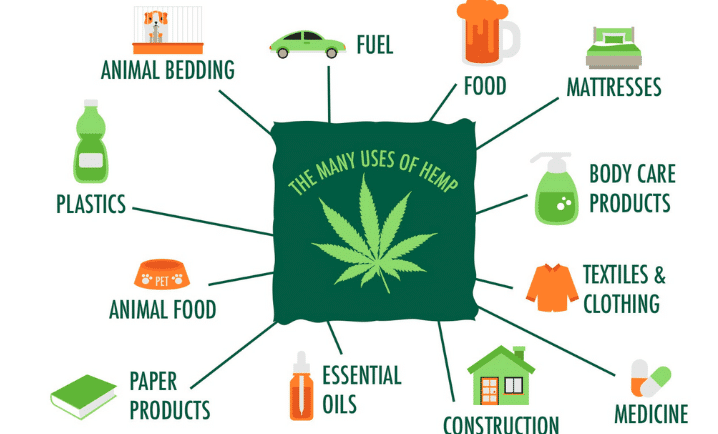
249 Uses of Hemp
Hemp is one of the most versatile and sustainable crops in the world. It is scientifically known as


